EisnerAmper Client Portal.
Designing a dependable mobile experience for secure client collaboration, engagement access, document exchange and request management.
Explore the case study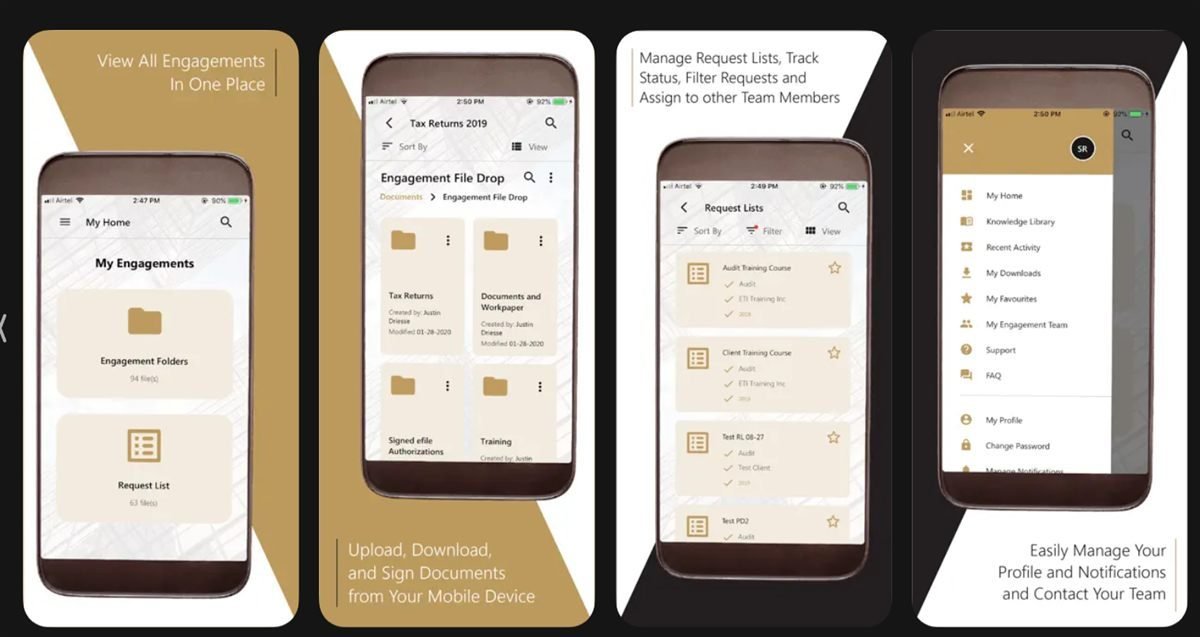
Confidence across every sensitive interaction.
The legacy portal currently supports account access, password recovery and two-factor authentication. Its public notice says new Tax work transitioned to HubSync after November 22, 2025.
VIEW NOTICEMake secure financial work feel approachable.
Clients needed to access engagements, exchange sensitive documents, respond to requests and contact their service team without feeling lost inside an enterprise system.
Information discovery
Engagements, folders, requests and activity needed a hierarchy clients could understand quickly.
Task confidence
Upload, download, signing and request actions required clear status and completion feedback.
Secure access
Authentication, recovery and account security needed to feel protective rather than confusing.
A shared portal serving different levels of familiarity.
The experience needed to support occasional clients, engagement participants and internal service teams without assuming expert product knowledge.
Simple self-service
- Find the correct engagement
- Exchange documents securely
- Understand outstanding requests
Account confidence
- Manage profile and notifications
- Access support and FAQs
- Control personal security settings
Reliable collaboration
- Receive complete information
- Track request progress
- Reduce avoidable support friction
From complex requirements to a coherent system.
My work covered discovery, experience structure, user flows, wireframes, high-fidelity UI, prototyping, usability evaluation and collaboration with developers and stakeholders.
Understand priorities
Reviewed client tasks, business requirements, security constraints and recurring support pain points.
Organise the portal
Grouped engagements, documents, requests and personal tools into predictable destinations.
Create reusable patterns
Defined navigation, cards, lists, status cues and responsive interaction patterns.
Refine with evidence
Used prototypes, stakeholder feedback and usability observations to clarify key journeys.
Trust is built through understandable details.
Security alone does not create confidence. Clients also need clear language, predictable feedback, visible context and easy recovery.
Lead with engagement context
Keep the relevant year, service team and engagement visible around files and requests.
Confirm every sensitive action
Communicate upload, download, signing and account changes with explicit feedback.
Make status meaningful
Describe what is required, what is complete and what remains instead of using system language.
Design recovery with care
Help clients recover access securely without exposing information or creating unnecessary fear.
From secure access to completed request.
A representative reconstructed journey connecting authentication, engagement context and document action.
Authenticate and complete any required account verification.
Select the correct service engagement and working period.
Understand required documents, status and due context.
Complete the requested document action with clear feedback.
See updated status and know whether further action is needed.
Structure before visual polish.
These low-fidelity reconstructions communicate the information architecture without claiming to be original historical files.
Make enterprise tasks feel manageable.
The final direction reduces visual noise, clarifies navigation and keeps security cues present without allowing them to dominate every interaction.
Visible engagement scope
Clients can identify the service context before opening folders or completing requests.
Readable request states
Status language supports scanning and makes the remaining client action clearer.
Security with explanation
Protective features are paired with human language and recoverable next steps.
One coherent mobile language.
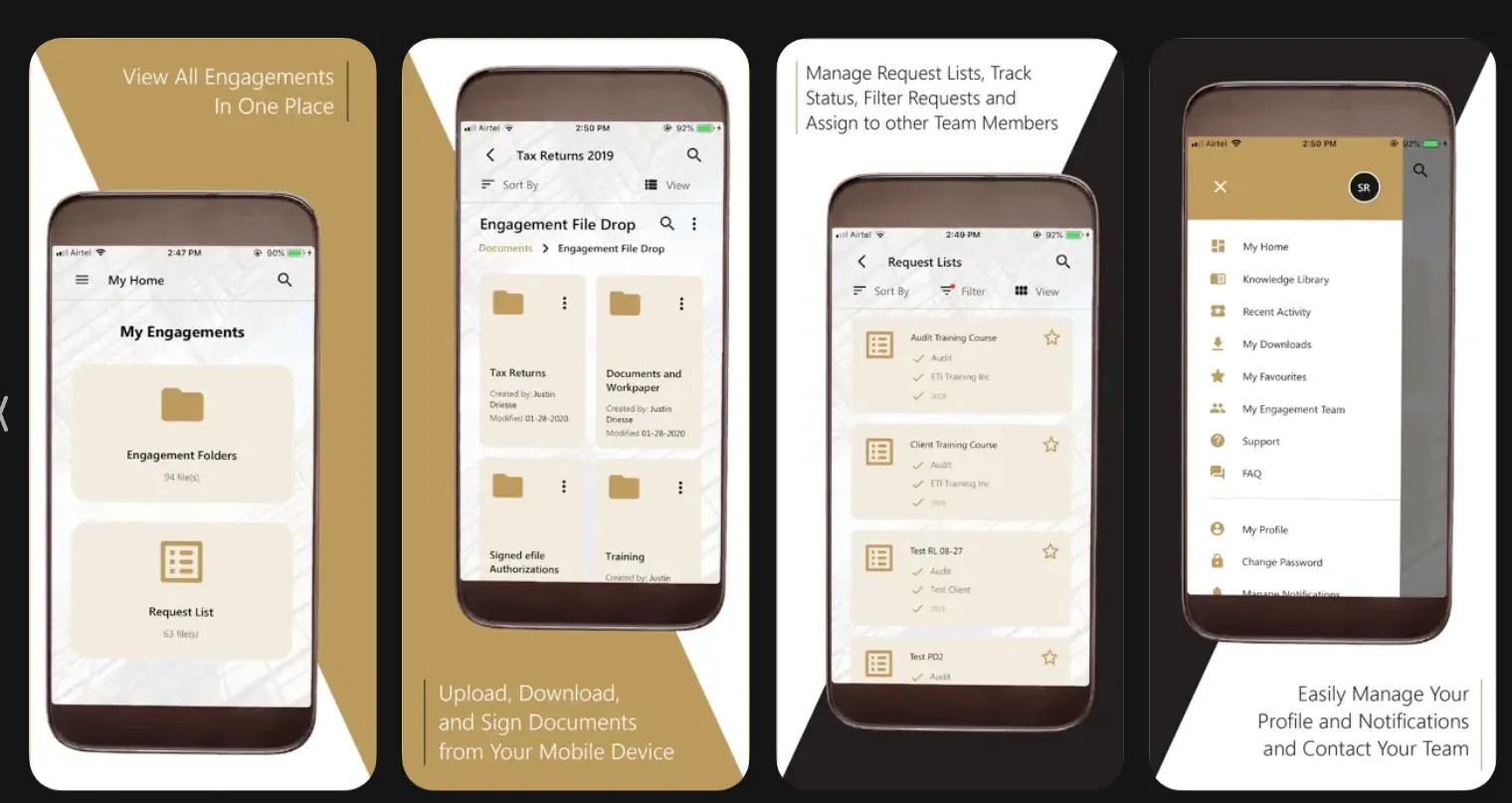
The genuine final screens use a restrained brand palette, familiar navigation, clear cards and visible status information to simplify enterprise collaboration.
Designed for confidence, not invented metrics.
Historical performance analytics are unavailable, so this case study focuses on defensible product value and design learning.
Clearer self-service
Clients can locate engagements, documents, requests, downloads and support from one mobile system.
More understandable security
Sign-in, account recovery and two-factor protection communicate what is happening and why.
Stronger task confidence
Visible context, status and feedback help clients know when their responsibility is complete.
In financial products, clarity is not decoration. It is one of the strongest signals of trust.